

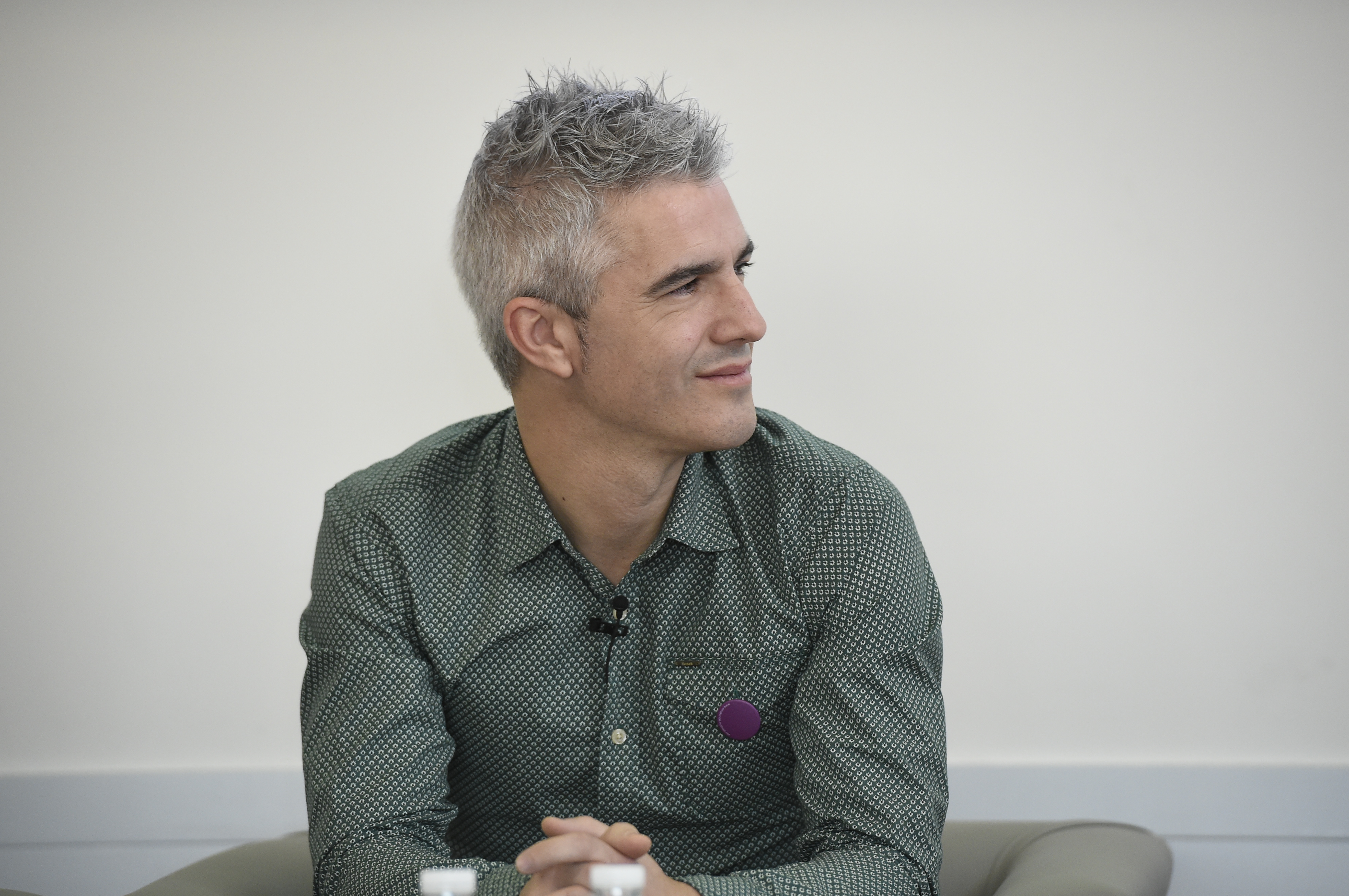
A conversation with Ibon Uribe. Mayor of Galdakao, EUDEL Equality representative and Chair of the Equality Committee of the Council of European Municipalities and Regions (CEMR)
* Part of this interview was published in the January 2017 issue of the ‘Carta Local’ magazine (FEMP).
-What is the remit of the CEMR Equality area that you represent?
Its institutional mission is fundamental and its multi-level work encompasses three spheres:
- Fostering and facilitating equality policies in European municipalities
- Incorporating equality into the structure, culture and work of the CEMR as an organisation
- Lobbying the European Institutions to strengthen the role of the Municipalities in the implementation of European equality policy.
–In which aspects, and please be as specific as possible, do the general public feel the effect of the work you do and the agreements you adopt?
Our activity affects and impacts the daily life of women and men. The work of the CEMR is underpinned by a common standard for all municipalities, the European Charter for Equality of Women and Men in Local Life (2006). The signatory local governments of the Charter assume the political commitment to develop equality policies in different spheres. Since its launch, hundreds of projects have been implemented in such different areas as health, mobility, employment, climate, violence against women, etc, to achieve more equalitarian and inclusive municipalities.
I would highlight in my local realm, that of the Basque municipalities, the ‘Beldur Barik’ project to prevent gender-based violence among young people, to give a specific example of good practices. A second success story is that of the Swedish city of Västerås, where the gender perspective has been incorporated into the municipality’s urban planning and in the design of infrastructures that take the specific needs of women and men into account.
– What are the objectives for the term in office on which you are now embarking?
We embarked on the term in office as the Equality Chair in 2014 with these objectives:
(1) To influence equality policies within the European organisations by representing the municipalities, associations and the CEMR.
2) To raise political awareness for equality by increasing the number of signatories to the European Equality Charter.
(3) To reinforce the work of the municipal associations of the CEMR and to monitor the implementation of equality in the statutory structures of the CEMR.
The objective for the coming years is to maximise the transformative power of municipalities to make our society more equalitarian and to put equality at the centre of the political agenda locally and regionally.
-And can you tell us about any priority action?
In June 2018 (11-13), Bilbao will host the CEMR’s Conference under the theme ‘Equality, Diversity and Inclusion’. I would like the event to attract the largest possible number of signatories of the European Charter to showcase a European Network of Municipalities for Equality based on the experience of the Basque Berdinsarea Network and for the necessary resources to be available for it to carry out its work.
-What are the basic objectives in the medium-long term beyond this term of office?
The medium-long term priorities regarding equality were actually approved at Maastricht and comprise:
1. Political commitment. Gender equality must be at the centre of the political agenda and be included in all policies, legislation, services, activities and budgets.
2. Balanced participation of women and men. The balanced representation and equalitarian influence of women and men in political life, at all levels of government, is a prior requirement for a democratic society. Positive actions, such as the quota systems, are needed to achieve this objective.
3. Social commitment and awareness raising. Awareness-raising, commitment and the involvement of boys and men in the fight for equality are necessary at all levels of society.
4. Eradication of violence against women. Urgent action must be adopted at all levels of governance to prevent violence against women and girls, help victims and survivors, hold the policy makers to account and raise awareness about all forms of violence against women in order to change attitudes and behaviour.
5. Equal access and control of services and resources. Services and resources (for example: health, sport and recreation, social welfare) of the same quality must be accessible for women and men, girls and boys, and adapted to their different needs and preferences.
6. Consolidate the participation of women in the job market and economic empowerment. More measures are needed, in particular, to close the gender pension and pay gap and eliminate occupational segregation.
7. Work-life balance. Measures must be adopted to improve a between work-life balance for women and men, for example, by introducing job flexibility measures, non-transferrable paternity leave and providing affordable and high-quality care services. Unpaid care and domestic work must be shared fairly between women and men.
8. Equality as a core European value. Europe must integrate the fundamental value of equality between women in men in its global actions, such as trade policy, development cooperation and humanitarian work.
9. Gender perspective in migration and refugee policy. Europe must assume the specific needs faced by female and male migrants, refugees and asylum seekers.
10. European funding of local actions to foster equality.Appropriate funds and programmes are needed to support the endeavours to progress regarding gender equality. In particular, regarding the European Equality Charter and its online Observatory, along with regional and local initiatives in the field of equality.
–And what does achieving that depend on?
It depends on being able to put equality at the heart of the political agenda, on the necessary resources being earmarked, on coordinating work between the different levels of government and to the fundamental role being recognised that the European municipalities are playing and must play in this regard.
-The vast majority of the general public when asked does not know what the CEMR is. Can you explain the role of the CEMR in a straightforward and easy-to-understand way?
The Council of European Municipalities and Region (CEMR) is the voice of all the municipalities of Europe. It represents nearly 150,000 regional and local governments from 42 different countries.
The CEMR is widely unknown because it has a complex and essential mission that must be handled discretely: by lobbying to defend municipal interests before the common institutions of the EU.
Its work from its Brussels headquarters is twofold: That of influencing, on the one hand, to influence European legislation on behalf of the municipalities; while at the same time acting as a platform to exchange and showcase good practices and innovative projects at local level.
-What is or what should be the CEMR role in the future of the EU be?
The objectives of the CEMR include contributing to the development of the European spirit from the cities and regions, building a greater and better Europe from local level. The municipality, as the level of government closest to the public, is the base of European democracy, coexistence, and solidarity.
In the coming years, the objective is to progress towards Good Local Governance. Local institutions closer to the people; a new municipal policy with five transversal pillars: public ethics, transparency, citizen participation, innovation and, of course, equality.